


Hello! My name is Dr. Sara Skiba and I have nearly a decade of experience working with nonhuman primates. My expertise is in great ape social behavior, communication, and cognition. In this article, I will share with you how the Ape Initiative team used positive reinforcement training to administer the COVID-19 vaccination to our closest living relatives – the bonobo.
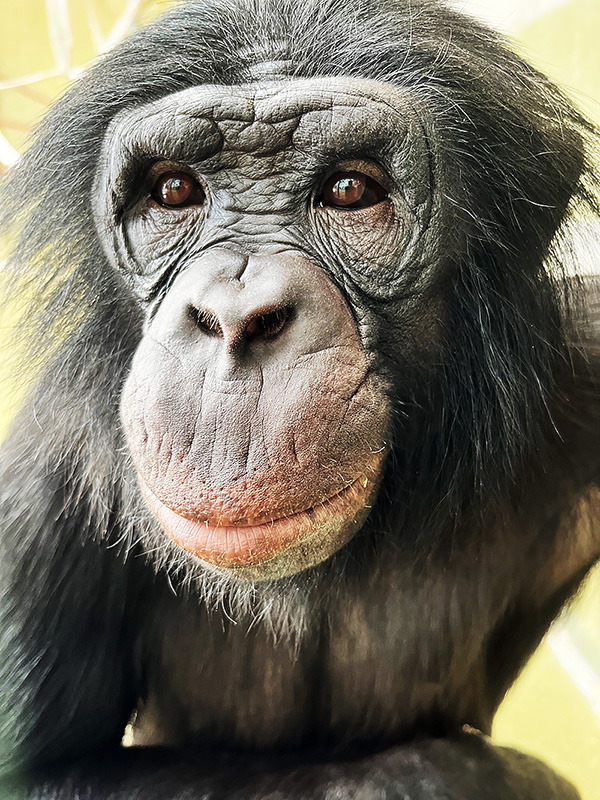
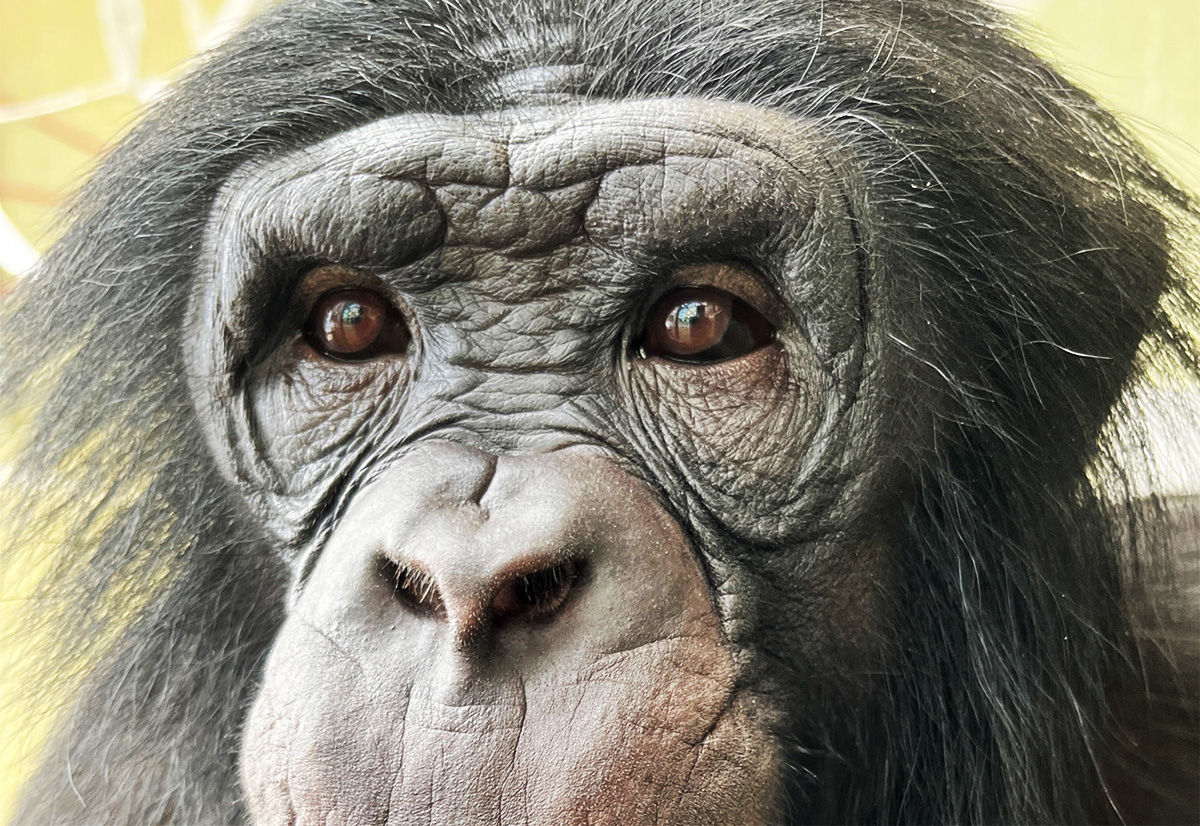
Bonobos are an endangered species of great ape with as few as 15,000 individuals left in the wild. Bonobos are native to the Democratic Republic of Congo, with habitat destruction and the illegal bush meat and pet trades as the greatest threats to their survival. Ape Initiative is the only research facility in the world dedicated to the study and conservation of the endangered bonobo. Our mission is to learn as much as we can about bonobos to inspire the next generation of scientists and conservationists to save this magnificent species. We currently house a family of seven bonobos, including the world-famous bonobo Kanzi, as well as Elikya, Nyota, Maisha, Mali, Clara, and Teco .
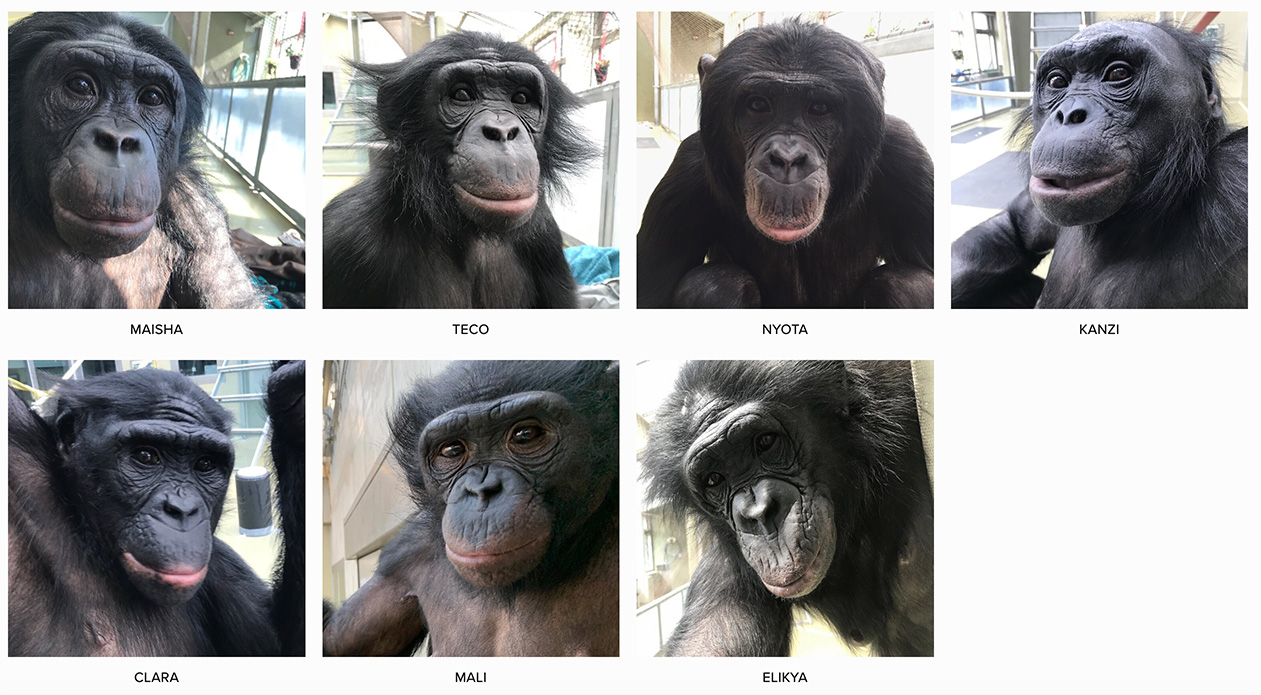
At Ape Initiative, positive reinforcement training is a critical part of our husbandry and veterinary care programs. Each day, our bonobos can choose to participate in one-on-one training sessions with their caregivers. Bonobos are our closest living relatives, and as such, are susceptible to the same type of respiratory illnesses as humans. Vaccinating bonobos against illnesses, such as COVID-19, is a necessary part of captive animal care.
The COVID vaccine for animals was developed and donated by Zoetis. This vaccine was designed to be administered subcutaneously. This means the vaccine must be injected between the skin and muscle, and it requires a 'tent' to be made with the skin. This posed a new challenge for us at Ape Initiative! While all of the bonobos were trained for intramuscular injections, none of them had experience with subcutaneous injections. Our veterinarian, Dr. June Olds, and our team decided it was in the bonobos’ best interest to administer the vaccine as it was manufactured. Therefore, our team designed a new training protocol for subcutaneous injections for the bonobos.
In video 1 you can see Teco the bonobo presenting his leg for a mock intramuscular injection.
In contrast, video 2 shows how Teco must hold for a mock subcutaneous injection. Teco’s caregiver Calle gently creates a tent with Teco's skin before pressing a blunted needle against it.
El tercer vídeo nos muestra a Kanzi, Nyota y Teco recibiendo su primera dosis de la vacuna.
Video 3 shows Kanzi, Nyota, and Teco receiving their first dose of the vaccine. After working together to train this behavior, all seven of the Ape Initiative bonobos presented voluntarily for both doses of the COVID vaccine for animals..
Daily husbandry training sessions, like the ones seen here, help the bonobos to feel comfortable and confident during veterinary care procedures, and allow them to be active participants in their own care! We are so proud of our bonobos and our team for learning this new technique. With positive reinforcement training, the possibilities for captive animal care are endless.
Thank you so much to Wezooit for helping us raise awareness about the endangered bonobo and their plight in the wild! Special thanks to Dr. June Olds and to the Ape Initiative care team. You can learn more about bonobos and Ape Initiative here: apeinitiative.org www.apeinitiative.org
Please contact us at
Sara A. Skiba, PhD
Research Associate
Ape Initiative